Charming Farm Watercolor Cliparts: Adorable Animals for Your Projects
The Whimsical Appeal of Soft, Hand-Painted Farm Art
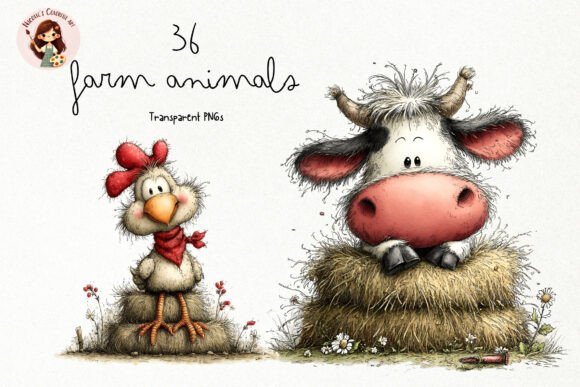
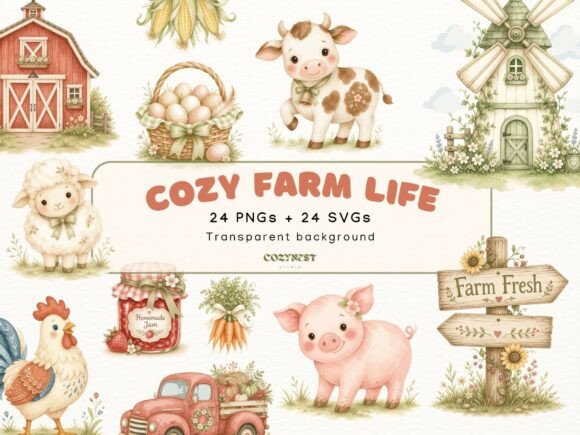
There's something undeniably comforting about farm imagery—the gentle curve of a cow's back, the proud strut of a rooster, the rustic simplicity of a barn door. When these familiar scenes are rendered in soft watercolor washes, they take on an almost storybook quality that feels both nostalgic and fresh. This particular collection of farm watercolor cliparts captures that sweet spot between artistic sophistication and childlike wonder. Each illustration carries the delicate transparency of real watercolor paint, with gentle color bleeds and soft edges that make every animal and object feel hand-painted just for your project.
The visual personality here leans heavily into what designers often call "countryside charm." You won't find harsh lines or overly saturated colors. Instead, think muted pastels, earthy greens, warm barn reds, and golden harvest yellows that blend together with that characteristic watercolor softness. The animals themselves have expressive, friendly faces—cows with gentle eyes, pigs with rosy cheeks, sheep with fluffy wool rendered in delicate layers. This isn't photorealistic farm art; it's the idealized, heartwarming version that works beautifully for projects meant to evoke warmth, comfort, and a connection to simpler times.
Where These Farm Cliparts Truly Shine
As someone who works with various design assets regularly, I've found that watercolor farm illustrations occupy a unique niche. They're versatile enough for serious commercial applications yet charming enough for personal creative projects. Nursery decor is perhaps the most obvious fit—these illustrations translate beautifully to wall prints, growth charts, and mobile elements. The soft color palette works naturally in baby and children's rooms without overwhelming the space. But their usefulness extends well beyond the nursery door.
For small business owners in the agricultural or artisan food space, these cliparts offer an authentic way to build brand identity without resorting to stock photography that feels generic. A small-batch jam producer could use the berry basket illustration on product labels. A local farm stand might incorporate the tractor and barn elements into their signage and social media graphics. The collection's consistency in style means you can create cohesive packaging design, editorial layouts, and marketing materials that all feel intentionally curated rather than cobbled together.
Planners, journalers, and scrapbookers represent another natural audience. The 24 PNG files with transparent backgrounds make it straightforward to drop these elements into digital planners or print them as sticker sheets. Each illustration sits cleanly against any background color or pattern, which eliminates the tedious masking work that often accompanies watercolor assets with white backgrounds. The SVG files add another layer of flexibility for crafters using cutting machines or designers who need scalable vector graphics for larger format printing.
Practical Considerations for Working with Watercolor Clipart Collections
When evaluating any design asset bundle, resolution and file format matter significantly. At 300 DPI, these illustrations handle both digital and print applications without pixelation or quality loss. That resolution is particularly important if you're creating printable planners or wall art where crisp detail shows up in the final product. The transparent PNG format saves considerable editing time, though it's worth noting that watercolor edges can sometimes appear slightly different against very dark backgrounds compared to light ones. Testing a few placements before committing to a final layout always pays off.
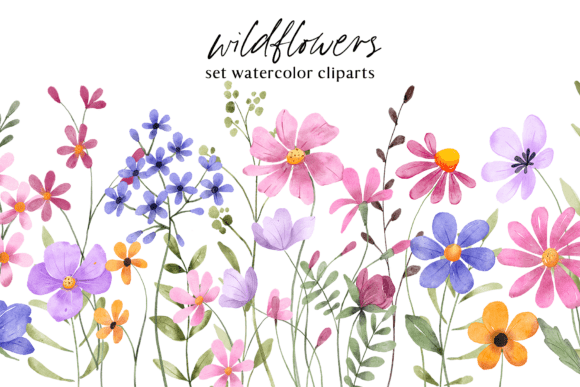
Color consistency across the collection deserves attention too. A well-curated watercolor clipart set maintains a unified palette so that mixing and matching elements—say, placing a sunflower next to a farmhouse—doesn't create visual discord. The illustrations in this bundle share complementary tones that work together harmoniously, which is essential for multi-element designs like scrapbook pages or classroom bulletin boards. If you're pairing these cliparts with existing brand colors, the soft, somewhat muted watercolor tones tend to play nicely with most palettes, though they naturally complement earth tones, pastels, and warm neutrals best.
For those considering commercial use, it's always wise to review licensing terms carefully. Many clipart collections permit use in print-on-demand products, which opens doors for entrepreneurs creating t-shirts, mugs, tote bags, and similar merchandise. The key is understanding whether the license covers the specific commercial application you have in mind. These farm watercolor cliparts work particularly well for seasonal products—think autumn harvest themes, spring baby animal collections, or year-round farmhouse aesthetic merchandise that taps into the enduring popularity of rustic, cottagecore-inspired design.
Design Pairings and Creative Applications
Watercolor farm illustrations pair beautifully with certain typography styles. A clean sans serif font creates pleasing contrast against the organic, hand-painted quality of the cliparts. For projects leaning into that storybook feel, a gentle script font or handwritten typeface can reinforce the whimsical personality. The trick is avoiding typefaces that compete with the illustrations for attention—since watercolor art carries significant visual weight through texture and color variation, simpler letterforms often work better than ornate display fonts.
Consider how these assets might serve projects beyond the obvious. A food blogger could use the harvest produce illustrations as section dividers or accent elements in recipe posts. A children's book illustrator might find them useful as reference elements or compositional starting points. Classroom teachers creating educational materials about farms, animals, or food sources have ready-made visual aids that feel more engaging than clip art from a standard office suite. Even wedding stationery for rustic or barn-themed celebrations could incorporate these elements tastefully, particularly the floral and harvest pieces.
The bundle's inclusion of both animals and supporting elements—tractors, baskets, farmhouse structures, produce—means you're not limited to single-illustration projects. You can build entire scenes, create themed collections, or develop a visual narrative across multiple pages or products. That compositional flexibility is what separates a useful clipart bundle from a collection of isolated images that never quite work together. When you're building a brand identity or developing a product line, having assets that function as a cohesive system rather than standalone pieces makes the design process smoother and the final result more professional.