The Enduring Charm of Vintage Musical Instrument Illustrations
There's a certain warmth that comes with the look of aged paper, the subtle gleam of brass, and the intricate details of a bygone era's craftsmanship. This is the world evoked by a well-curated set of vintage musical instrument illustrations. More than just simple drawings, these assets carry a personality—a blend of nostalgia, elegance, and artistic tradition that can instantly elevate a design project. For creators seeking to add a layer of sophistication and story, understanding how to leverage these illustrations is key.
Defining the Visual Character
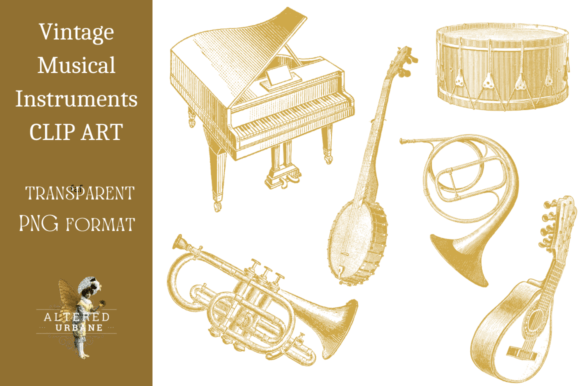
A set of 10 gold-tinted vintage musical instrument illustrations is a specific design asset with a clear visual language. The "gold tint" isn't a flat, modern yellow but rather a nuanced shade suggesting aged metal, gilded finishes, or the warm tones of sepia-toned photography. The style typically references engraving, etching, or detailed pen-and-ink techniques, giving each piece a sense of historical authenticity. The personality is one of refined artistry, appealing to an audience that appreciates heritage, quality, and a touch of romanticism. This isn't the bold, flat aesthetic of modern minimalism; it's a design choice that communicates depth and tradition.
The set's composition—featuring instruments like a piano, snare drum, French horn, trumpet, ukulele, and guitar—offers a balanced orchestra of shapes and textures. The curved brass of the horn contrasts with the angular lines of the piano, while the guitar's organic form complements the snare drum's geometric precision. This variety makes the collection incredibly versatile for layout and composition, allowing designers to create dynamic arrangements without visual monotony.
Strategic Applications for Maximum Impact
The true value of these illustrations lies in their application. They are not merely decorative but functional design elements that can shape brand perception and audience engagement.
For Branding and Commercial Identity
For businesses in the music industry—a boutique instrument repair shop, a vinyl record store, a music education platform, or a jazz café—these illustrations become foundational elements of a brand identity. Used in logo design, they instantly communicate a classic, trustworthy, and passionate ethos. On packaging design for products like craft coffee or artisanal goods, they add a layer of curated taste. In web design, they serve as compelling hero images or section dividers, breaking up text and guiding the user's eye while reinforcing the site's thematic core. The consistent use of this gold-tinted style across social media graphics, email headers, and printed materials builds a recognizable and professional brand presence.
For Publishing and Editorial Projects
In editorial design, these assets are invaluable. A music magazine, blog, or book about musical history can use them as chapter openers, pull quotes, or background textures. They add visual hierarchy without competing with the body text, especially when used in a subdued, duotone application. For scrapbooking and digital journaling, they provide high-quality thematic elements that are difficult to create from scratch. The transparent PNG format at 1200x1200 px is particularly useful here, allowing for easy layering over other images or backgrounds without a distracting boxy edge.
For Physical Products and Home Décor
This is where the illustrations transition from digital to tangible. Sublimation on mugs, tumblers, and tote bags is a direct and popular application. The gold tint translates beautifully onto ceramic and metal, creating a product with perceived higher value. For wall art, they can be printed as part of a gallery wall arrangement, perhaps framed in antique-style frames to enhance the vintage feel. They work exceptionally well in home décor for music rooms, living rooms with a classic aesthetic, or commercial spaces like restaurants and lobbies aiming for an cultured ambiance.
Practical Guidance for Integration
Choosing to use a vintage illustration set is just the first step. Effective integration requires a designer's eye for context and balance.
Evaluating Project Fit: Before committing, consider your project's overall mood. These illustrations thrive in contexts where heritage, craftsmanship, and narrative are valued. They might feel out of place in a project designed to be ultra-modern, stark, or aggressively minimalist. Test them by placing a sample illustration on your working canvas or mockup. Does it complement or clash with your existing color palette and typography?
Font Pairing and Typographic Harmony: The style of these illustrations naturally suggests certain typographic pairings. To create a cohesive vintage feel, consider pairing them with a serif font like a transitional or old-style typeface. A script font or handwritten font can add a personal, artisanal touch for headlines. For contrast and modern readability in body text, a clean sans serif font works well, as long as its style doesn't feel too futuristic. The goal is to create a dialogue between the detailed imagery and your chosen typeface, ensuring neither overwhelms the other.
Leveraging the Format: The 1200x1200 px transparent PNGs are a premium asset. Their square format is ideal for social media posts and allows for flexible cropping. Use the transparency to your advantage: layer them over textured backgrounds, photographs, or color gradients. In design software, you can easily adjust the color balance to mute the gold for a more subdued look or increase the contrast for higher impact.
Understanding Licensing: As with any commercial font or design asset, clarify the license. Most quality sets are available for commercial use, which is essential for entrepreneurs and small business owners. This ensures you can legally use them on products for sale, in client work, and across your marketing channels without future legal complications.
Ultimately, a set of vintage musical instrument illustrations is more than a collection of images. It's a toolkit for storytelling, a way to inject soul and history into digital and physical projects. By understanding their inherent style and applying them with thoughtful strategy, designers, creators, and business owners can craft experiences that resonate deeply with an audience that values authenticity and artistry. They are a timeless design asset, connecting the rich past of musical art with the creative possibilities of the present.